


.svg)
he other day I was scrolling on Instagram (looking at SFW fetish pics as usual) when something else popped up: a sex ed infographic. I was pretty busy as you can imagine and was about to thumb past it before something in the wording caught my eye. Somewhere in the cheerful visuals and bullet point lists was the phrase “using porn.” Now, this is a pretty common expression— I wouldn’t be surprised if I’ve said it myself at some point (no going through my backlog to uncover my hypocrisy!) I think it’s weird, though.
I’ve never in my life heard anyone talk about “using” Marvel movies or music videos. You might use a TV or computer to access them, but the media itself is ‘watched’ or ‘viewed’ or ‘consumed.’ “Using” is a super weird way to refer to visual media or text. When it comes to porn, though, the turn of phrase is so commonplace even sex-positive education organizations repeat it without a second thought. Maybe I’m reading too much into it, but I’m about to write too much into it, too, so buckle up!
The History of "Using Porn"
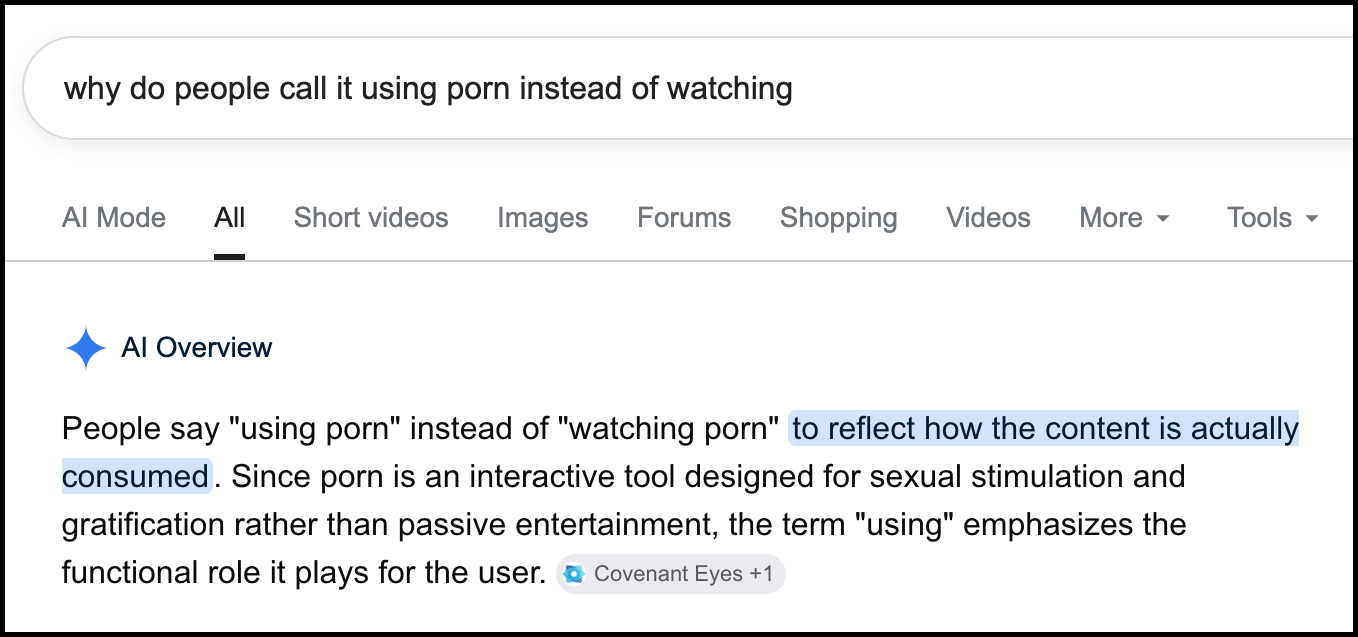
Because no one in the history of time seems to care about this but me, I can’t exactly tell you the history of people calling watching porn “using.” Okay, I could spend three days researching every way porn’s been talked about for the last century but girl, I’m lazy. Instead, I googled, as one does, and got some…weird answers.
None of the actual website results had anything to do with the terminology, but Google AI provided a confident (if not particularly enlightening) set of responses. When did the shift to calling it “using” happen? In the mid-2000s, of course, reflecting porn’s evolution “from a passive broadcast medium into an interactive, tool-like utility.” Why do people call it “using”? Well, because “porn is an interactive tool designed for sexual stimulation and gratification rather than passive entertainment.”
I thought these answers were pretty sus, and the citations confirmed that. The whole thing about porn transforming in the 2000s came directly from the Wikipedia page for Pornography…where nothing of the sort is stated. I mean, yes, porn has been evolving. The advent of the internet absolutely changed how people access and enjoy porn, but if there’s any argument for the internet making porn into an ‘interactive tool’ in the 2000s, Wikipedia doesn’t give it.
Is Porn a Tool, or Just Another Form of Media?
Both answers Google gave call porn a “tool.” If porn was a tool, the “using” terminology would make sense. But, like, is it? It’s a common sentiment, but I don’t really buy it.
Obviously, folks consume porn to feel good and help them reach orgasms. Sexual pleasure is the number one reason people consume (or as the study puts it “use”) porn and most definitions stipulate that, in order for something to be “porn,” it needs to intend to cause sexual arousal. So, sure, you could say porn is a tool made for helping people get horny and reach orgasms…the same way you could say food’s a tool made to reduce hunger. But we don’t say that, do we?

Porn vs. Horror: We Don't "Use" Horror Movies
Food’s a pretty bad comparison, so let’s look at something more relevant: horror. Just like porn, horror media is very popular but generally looked down on as being gratuitous and not so classy. When horror does feel classy, it’s separated out as “elevated horror”, the same way some porn gets to be called “erotica.” Men statistically enjoy horror more than women. It’s faced many feminist critiques for how it portrays gender, sex, and violence. Both academia and popular culture recognize the similarities, with research comparing horror and porn enjoyers and a subgenre of horror getting labeled “torture porn.”
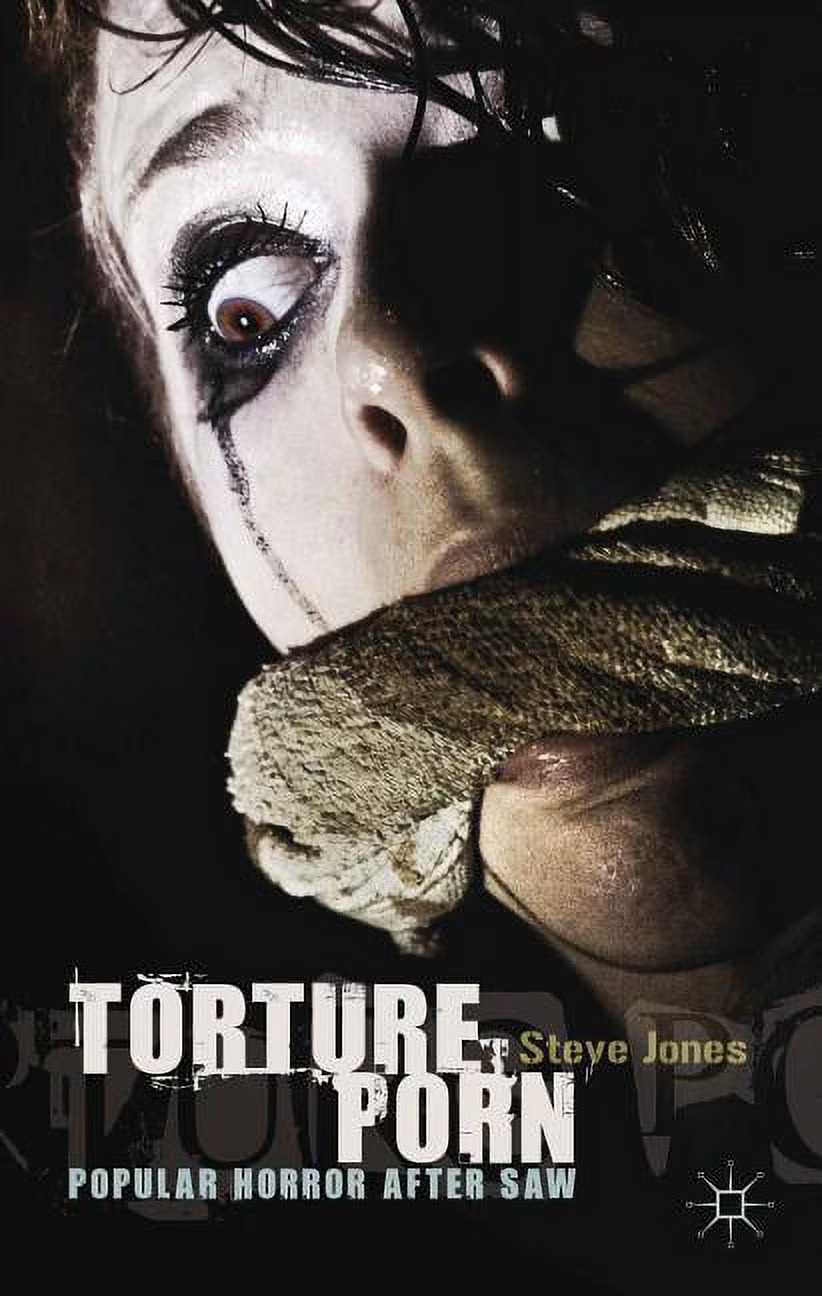
Any argument for porn being a tool is just as salient when applied to horror—it’s arguably a ‘tool’ to create fear. Horror is designed to elicit a direct physical and emotional reaction from its viewers. As Linda Williams put it in a seminal essay: the “success” of both porn and horror is “often measured by the degree to which audience sensation mimics what is seen on the screen.” No, a good horror movie won’t make your limbs fly off, but it might make you jump in fear like the victims do.
One of the most striking similarities between the new genres the gradual building of tension before euphoric release. More than that, the reasons people engage with both genres are probably pretty similar. People are bored, they want an emotional distraction. It’s thrilling to see depictions of transgressive stuff. They’re curious about things outside of their own experience, and want to have a good time.
There are all these similarities between horror and porn (and probably lots of other media). If someone told you they ‘engaged in regular horror movie use’ it would be super fucking weird, though. We would never call horror movies “tools” — maybe semi-metaphorically as part of some big ideological statement, but not casually. So why does it seem so normal when people do the same thing with porn?
Porn’s “The New Drug”
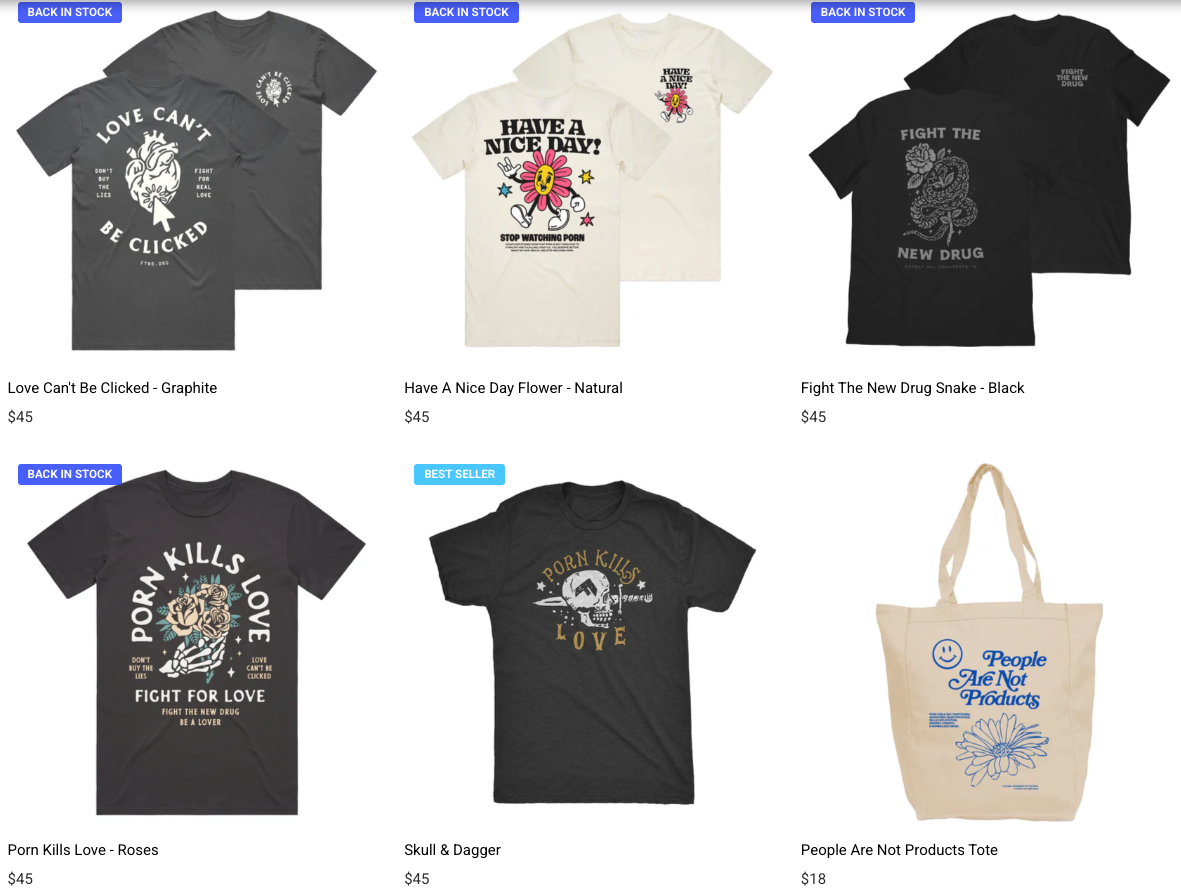
Now, some sex-positive folks will talk about “using” porn casually, but I suspect the origin is more sinister. I mean, some of you might have been screaming at the screen the whole time: It’s a subtle way to tie porn to drug use. Supposedly you “use” porn how you “use” amphetamines or opiates. It’s a reason people call looking at porn frequently “heavy use.” It subtly affirms the idea that porn, like some drugs, is dangerously addictive and liable to seriously harm your life. The popular anti-porn organization Fight The New Drug named itself after this equation. Obviously, I have my doubts, but I’d like to give the idea a fair shake.
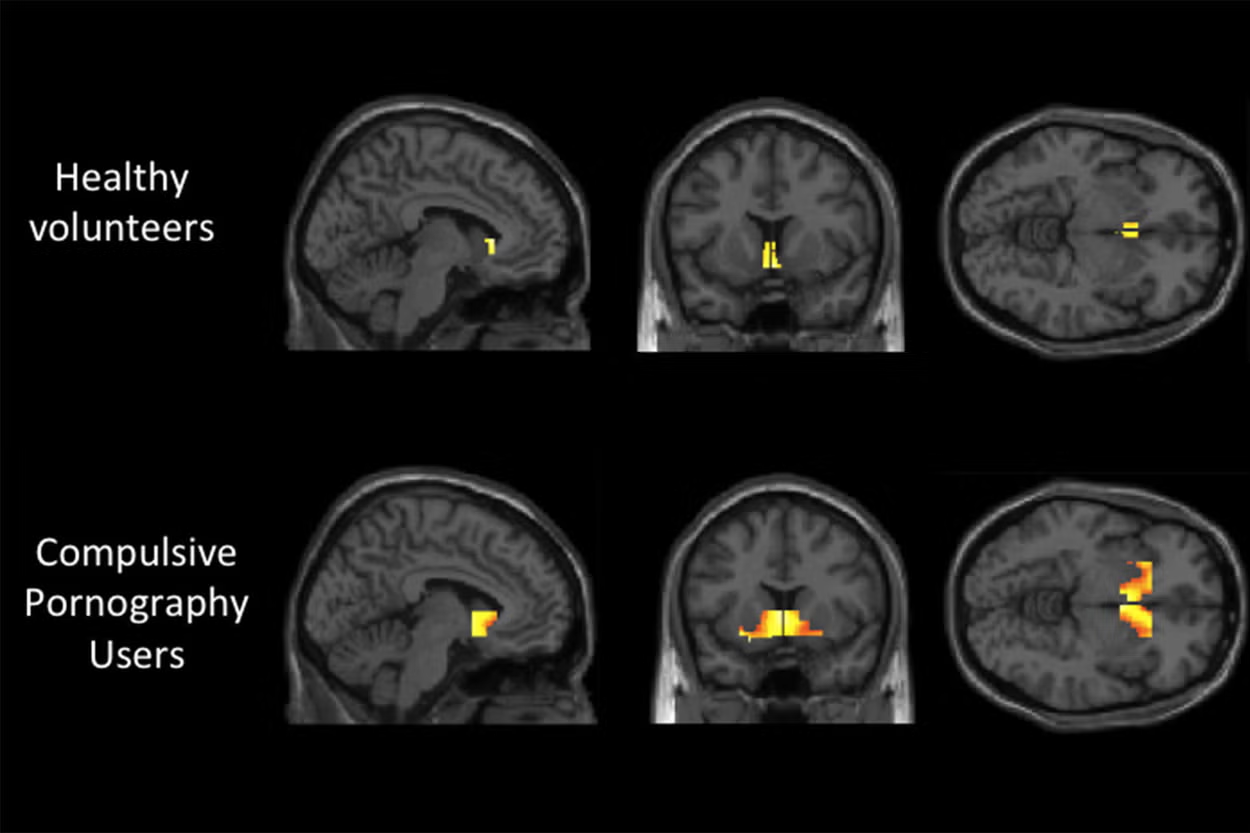
The science on porn addiction is pretty divided, but I’m not here to tell you it’s a myth. Sure, there’s no actual medical definition of “pornography addiction” per se, but the World Health Organization does recognize “Compulsive Sexual Behavior Disorder” which could include compulsive pornography viewing. The current edition of the Diagnostic And Statistical Manual Of Mental Disorders (DSM) does acknowledge the existence of “some behavioral conditions that do not involve ingestion of substances [that] have similarities to substance-related disorders.” However, “only one disorder—gambling disorder— has sufficient data to be included in this section.”
Honestly, even as a very porn+ person, I have no doubt that many people truly struggle with compulsive porn viewership. That would be a valid experience even if there wasn’t any formal codification to point to. You don’t need an institutional label to validate what you go through every day. Lists of diagnoses like the DSM are descriptions of patterns of behaviors and experiences. They aren’t the rulebook for how people can act or what they can go through. They’re liable to change and are arguably more of a tool for outlining what is and isn’t normal than what is and isn’t healthy. It’s a real experience to feel helplessly tied to adult media consumption in a way that harms your wellbeing.
The Drug Comparison Isn’t The Full Story
Some people do struggle with compulsory porn consumption, but I’m not convinced that’s the real reason it’s called “using porn.” There are many other compulsive behaviors colloquially called “addictions” that we don’t talk about in those terms. You don’t “use” video games, you play them. You don’t “use” sex you have it. You don’t “use gambling,” you just gamble. There are exceptions to that rule. For example, I used to use TikTok so much I’d neglect my physical needs for hours on end. Even that, though, is less about addiction and more because apps are generally “used” even when they’re not addictive. I use an app to turn my lights on and off. I swear I can stop whenever I want!
Clearly, the drug comparison isn’t the only reason we call it “using porn.” Even when there’s no discussion of porn’s habit-forming potential at all, the phrasing still comes up, especially in anti-porn discourse, which the internet has a lot of. There are some resources for folks genuinely suffering from problematic porn habits, but that more grounded content blurs into the slew of ideological sources that treat porn like an inherently dangerous, anti-woman, or sinful scourge on society. They often also talk about “heavy porn use” and the “dangers of porn use,” and it makes sense why: it’s a rhetorical strategy. That phrasing makes porn sound scarier than watching TV (which, for the record, can also form harmfully compulsive habits).
You know when I said those Google AI answers were sus earlier? Well, the citation for why people call it “using porn” was way weirder than the Wikipedia one: an article called “Yes, Using Porn Is Cheating. Here’s Why.” There, writer Luke Gilkerson argues the titular statement from a biblical perspective. It’s not an article about compulsive porn use, it’s an article about Christian morality. Still, “using porn” is how it’s phrased.

How "Porn Use" Stigmatizes Media and Workers
Porn is no more a tool than any other piece of media. It’s one of the only behaviorally ‘addictive’ things we say we “use.” So why’s that phrasing so common? Well, my best guess is cultural osmosis. Unfortunately, an overwhelming amount of internet discourse about porn is negative—driven by anti-porn organizations like Fight The New Drug. When people want to talk about porn in ‘classier’ contexts, they subconsciously mirror the phrasing they’ve seen before…even when they understand porn’s not inherently evil.
At the end of the day, there’s plenty of stuff to worry about and this phrase is very low on the list. It’s mostly just a pet peeve of mine. Still, calling it “porn use” subtly ghettoizes our genre. Porn isn’t a drug, even if some people have unhealthy habits with it. It’s not a tool any more than other forms of media are. By talking about porn as some illicit, inherently distinct form of media, we further stigmatize not just the creative work but the workers themselves. Plus, I worry it stunts the genre. I don’t want porn to be “just” for getting off as quickly as humanly possible. The best porn I’ve seen was innovative, thought-provoking. I didn’t use it like a fleshlight. I watched it. Duh.